
When to See a Doctor for a Wound
July 08, 2026 | By: Tender Care Home Health & Hospice
Most cuts and scrapes take care of themselves. Soap, water, a clean bandage—done. But telling a wound that's healing from one that's quietly going sideways? That's harder than it sounds, especially when you're watching over an aging parent, managing your own diabetes, or trying to judge a loved one's surgical incision from the next room over.
Our nurses at Tender Care Home Health & Hospice hear some version of this question almost every day, from families all over El Paso and Las Cruces: is this normal, or do I need to call someone? Fair question. Here's how to answer it yourself.
What Normal Healing Actually Looks Like
A healthy wound follows a pretty predictable script. Some redness, mild swelling, and tenderness in the first day or two, which is the immune system doing its job. After that, the direction is what matters, not any one day in isolation. It should look a little better each day, not worse.
Signs a Wound is Healing
- Pain and swelling that gradually decrease rather than intensify
- A wound that's shrinking, not growing
- Skin around it returning to its normal color
- Clear or slightly pink drainage that tapers off
- New pink or light red tissue forming as it closes
So, How Long Should a Wound Take to Heal?
Depends on the wound. Most minor cuts and scrapes show real improvement within 2 to 3 days and are mostly healed within 1 to 2 weeks. Deeper wounds and surgical incisions take longer—sometimes several weeks before they fully close, and that's normal too.
Here's the rule of thumb we give families: if a wound hasn't improved at all after about a week, or it's taken a turn for the worse at any point, don't keep waiting to see what happens. Have it looked at.
Signs of an Infected Wound
Infection sets in when bacteria get into a wound faster than the body can clear them out. It happens more often than people assume, and a missed infection can turn a minor injury into a real problem fast.
Call your doctor or home health nurse if you notice:
- Redness that's spreading or getting darker instead of fading
- Swelling or warmth that's increasing rather than easing up
- Pain that's getting worse, not better, several days in
- Pus, or thick yellow, green, or foul-smelling drainage
- A wound that reopens or won't close after it seemed to be healing
- Fever, chills, or just generally feeling off
The Red Flags That Mean: Don't Wait
Some symptoms aren't a "call in the morning" situation—they're a "go now" situation:
- Red streaks extending out from the wound, especially toward the heart
- Fever with chills, confusion, or a racing heart
- Skin around the wound turning gray, purple, or black
- Severe pain that seems way out of proportion to the wound itself
- Numbness, or the surrounding skin turning hard and tight
These can point to a fast-moving infection or sepsis. Skip the wait-and-see approach and get seen right away.
| Healing Wound | Infected Wound |
|---|---|
| Pain slowly decreases day by day | Pain increases or returns after improving |
| Redness and swelling fade | Redness spreads or darkens; swelling worsens |
| Drainage is clear or light pink, then stops | Drainage is thick, yellow/green, or foul-smelling |
| No fever or chills | Fever, chills, or feeling generally unwell |
Wound Care for Diabetics: Different Wound, Different Rules
If you or someone you love has diabetes, there's really no such thing as a "minor" wound. Diabetes can reduce blood flow and nerve sensation in the feet and lower legs, so a wound can get worse quietly—without the pain that would normally tip you off that something's wrong. That's what makes it dangerous. Not the wound itself, necessarily, but the silence around it.
Research published by the National Institutes of Health found that people with diabetic foot ulcers face a notably higher mortality rate than people with diabetes who never develop one. Read that twice if you need to. These are not wounds to wait out.
If you have diabetes: check your feet daily, skip going barefoot, and treat any redness, blister, or open area as something to get evaluated—not something to keep an eye on from across the room. Reduced sensation means you might not feel a problem before you can see one, which is exactly why the daily visual check matters more than how the area feels.
When to See a Doctor for a Wound
You don't need a diagnosis before you call—that part's our job. As a general guide, seek medical attention if:
- The wound is deep, won't stop bleeding, or has jagged or gaping edges
- It came from a bite, a rusty object, or anything that might not have been clean
- You're seeing any of the infection signs above
- You have diabetes, a weakened immune system, or poor circulation
- You're just not sure—and that uncertainty is the thing keeping you up at night
If you're already receiving home health or hospice services, this is a conversation for your nurse right now, not something to bring up at the next scheduled visit.
Wound Care at Home: How Tender Care Helps
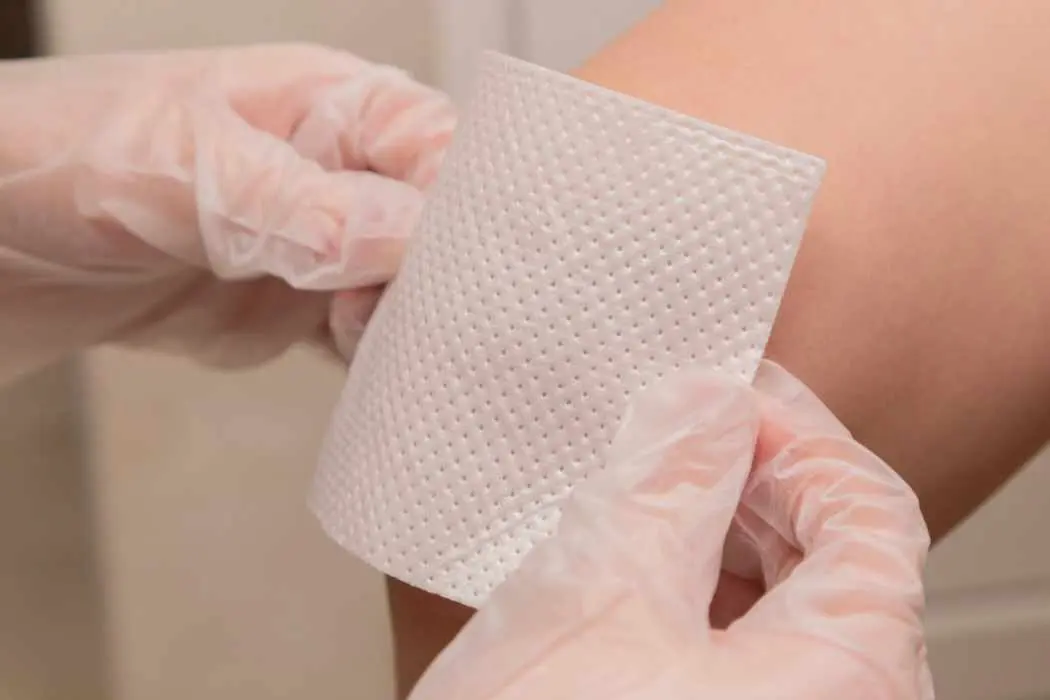
Not every wound means a hospital trip. But a lot of them benefit from real, hands-on wound care at home, the kind that catches small problems while they're still small. Tender Care's home health team, including wound care specialist Dr. Sandra Shults, works with patients across El Paso and Las Cruces to monitor healing, change dressings the right way, and loop in physicians fast if something changes.
That kind of steady, in-home attention matters most for patients recovering from surgery, managing diabetes, or dealing with limited mobility. We're CHAP-accredited, we hold a CMS Five-Star Quality Rating, and we were named one of Newsweek's America's Best Home Health Agencies for 2026. Our bilingual staff has been showing up for families across West Texas and Southern New Mexico since 2006.
If a wound just doesn't look right to you, trust that. Call or text us at (915) 581-3345 for El Paso or (575) 522-3076 for Las Cruces. Someone's there 24/7, and we'll help you figure out the next right step together.
This article is for general educational purposes and isn't a substitute for medical advice. If you're experiencing a medical emergency, call 911.
Sources: National Institutes of Health – Diabetic Foot Ulcers: A Review, MedlinePlus – Wounds and Injuries